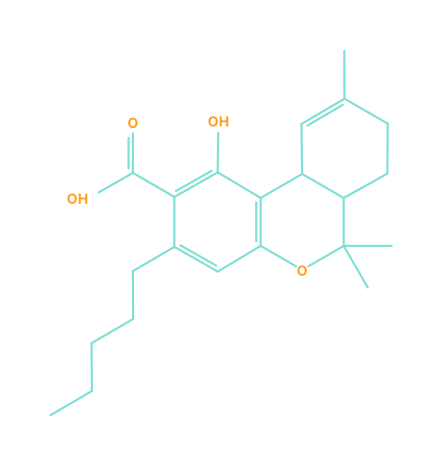

Δ9-THCA-A skeletal formula

schema + architecture · no lab data in-repo

CMIP

One place for compounds, cultivars, and lab COAs — so charts stop fighting five spellings of the same molecule.

View on GitHub v0.2.1 mok-tua v0.2.1 · MIT · public

why this exists

Spreadsheets keep lying about chemistry.

The same terpene shows up under five names. A boiling point is a bare number with no source. Aroma wheels get mixed into science columns. CMIP is a design for doing that job once, then sharing it.

identity

One row per real chemical

Everything else points at it. Do not paste α-pinene into ten tables and hope the spellings stay friends.

provenance

Numbers need a story

A boiling point is not just 177. Units, method, citation, and confidence travel with the value.

isomers

α-pinene is not β-pinene

Cis/trans and stereo matter for pathways and effects. Flatten them and the graph is fiction.

layers

Pretty wheels are not chemistry

Aroma, flavor, and effect taxonomies sit beside the science. They do not live inside the compound record.

how it is supposed to stack

Literature in. Charts out. Nothing mixed in the middle.

Knowledge Layer (literature / patents)
  → Reference Tables
  → Chemistry
  → Cultivars
  → Lab Results (Certificates of Analysis)
  → Retail Products
  → Genetics
  → Visualization

raw (unchanged sources)
  → staging (parsed, checked)
  → core (compounds, cultivars, measurements, citations)
  → marts (wheels, profiles, networks)

named sources, not mystery CSVs

Open data first. Models do not invent molecules.

Planned loaders would pull from public databases with licenses written down. Unvetted scrapes stay out.

identity

PubChem

CIDs, synonyms, InChI, SMILES, formula, mass. Public domain. The seed for a compound registry.

pubchem.ncbi.nlm.nih.gov →
ontology

ChEBI

Parent/child tree: Organic Compound → Terpenoid → Monoterpenoid. Not a flat dropdown.

ebi.ac.uk/chebi →
properties

NIST WebBook

Boiling points and friends with literature citations. Per-record pull, not a bulk scrape.

webbook.nist.gov →
activity

ChEMBL

Assays as compound / target / effect / confidence. Binding is not a blog post.

ebi.ac.uk/chembl →
pathways

KEGG

Terpenoid backbone and monoterpenoid maps. Academic/non-commercial free; commercial needs a license.

genome.jp/kegg →
occurrence

Dr. Duke’s

USDA-ARS phytochemical occurrence across plants. Linalool is not a cannabis-only claim.

phytochem.nal.usda.gov →
the map

Open-data pathways

Module → source → URL → license note. UniProt, Open Targets, ClinicalTrials.gov, FooDB, and the rest live here.

OPEN_DATA_SOURCE_PATHWAYS.md →
the pictures

mok-tua

Origin comic and lab art were rendered on a local Comfy box, FaceID from a public founder still. Not a cloud image API.

the1truedan.github.io/mok-tua →

origin

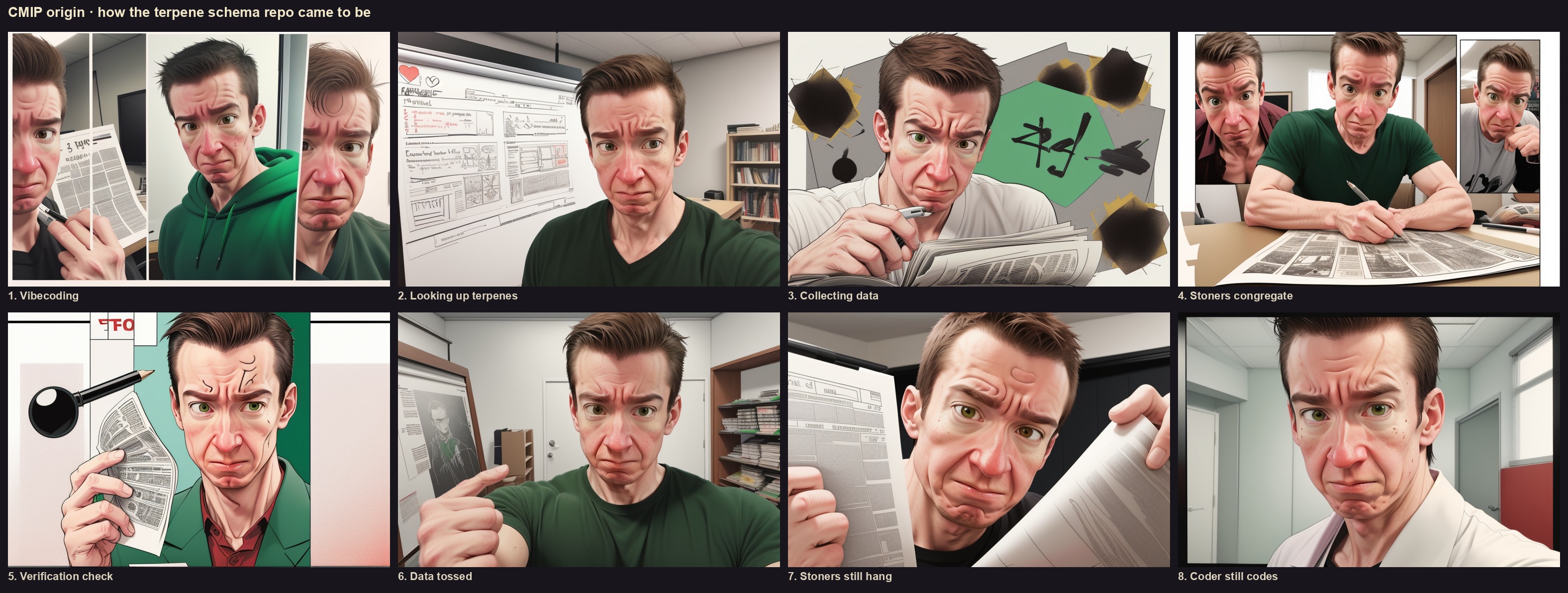
Look it up. Collect the pile. Toss what you cannot cite.

Eight-panel comic via mok-tua FaceID. The stoners stay. The unverified rows do not.

Eight-panel origin storyboard: vibecode, look up terpenes, collect data, stoners gather, verify, toss unverified data, stoners stay, coder still codes
Origin sheet — founder FaceID panels via mok-tua (local Comfy)

the picture, not the data

A lab that holds myrcene, pinene, limonene, and linalool apart.

Illustrated lab: a chemist holds a brass scope over a glowing cluster of myrcene, pinene, limonene, and linalool while people lounge on beanbags
Concept art — clusters are distinct molecules, not a flavor wheel

unverified staging · not science

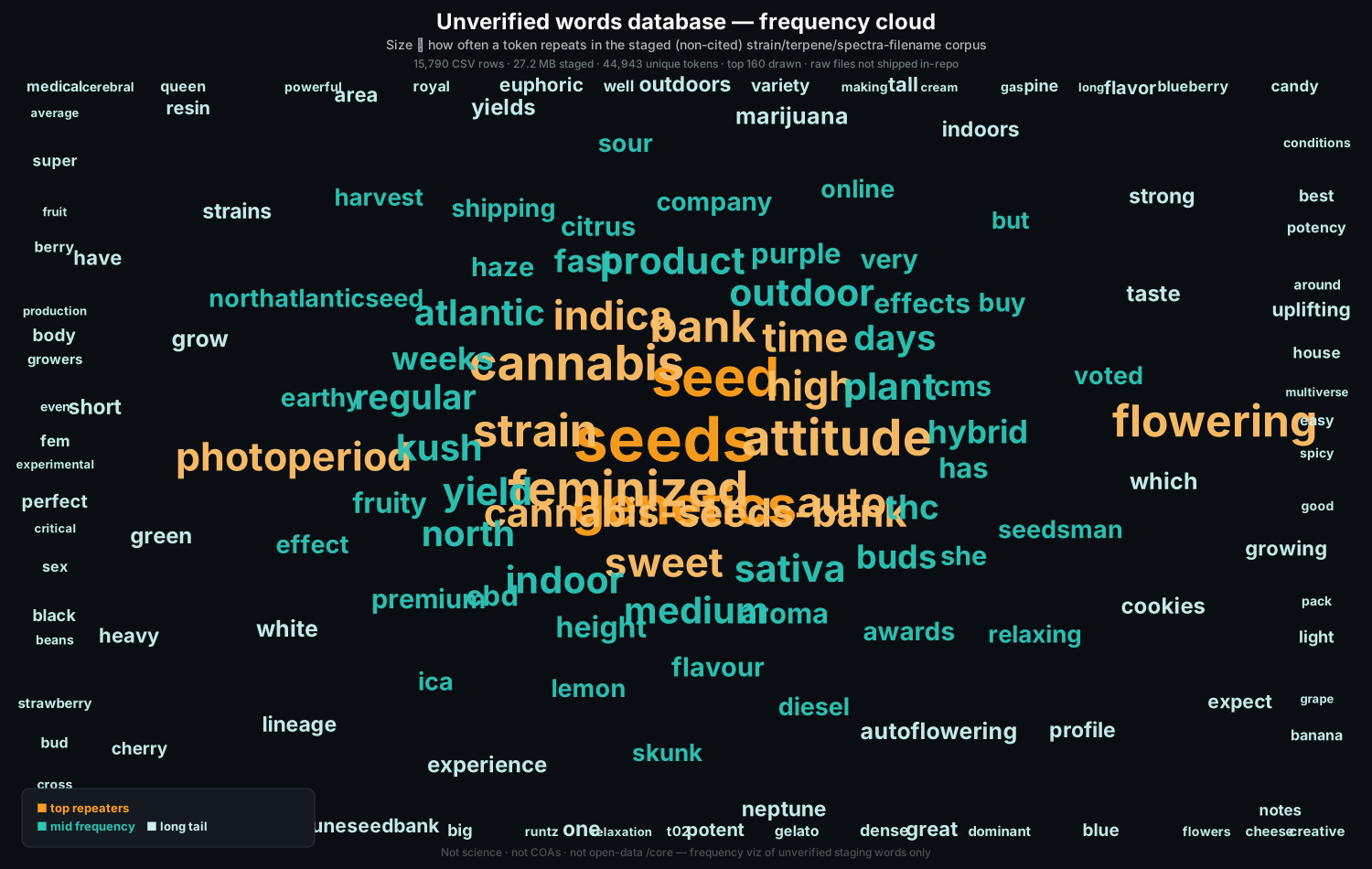
The scrape pile is withheld. This cloud is just how often words repeat.

Bigger type = more repeats in a local strain/terpene/spectra-filename dump that never got a license review. Not PubChem. Not COAs. Raw tables are not in this repo.

Frequency word cloud of tokens from an unverified local cannabis and terpene staging pile; size proportional to repeat count
15,790 staged rows counted · 44,943 unique tokens · top 160 drawn

what is deliberately missing

No compounds. No strains. No spectra. No medical advice.

Builders source licensed chemistry themselves. The private staging pile stays private until someone can show a paper trail. This repository is the architecture sketch after that pivot — not a compliance product, not a warehouse, not a chart that pretends a spreadsheet was a database.

why scheduling shows up in a schema repo

Research access changes whether citable chemistry is worth building.

On 18 December 2025 President Trump signed the executive order Increasing Medical Marijuana and Cannabidiol Research, directing the Attorney General to finish rulemaking toward Schedule III.

That is direction to complete a process, not a one-line rewrite of every CSA row. A May 2024 DOJ/DEA proposal and later 2026 DOJ medical-product actions sit on the same track. Precision lives in FEDERAL_CANNABIS_RESCHEDULING_CONTEXT.md.

who talked, who is cited

Design chats are not data sources.

Grok, ChatGPT, Claude, and local models helped sketch the shape. PubChem still has to say the molecule exists.

design

Conversation providers

Who brainstormed schema and licensing language. No chat dumps. No session IDs. Human owns the published text.

CONVERSATION_PROVIDERS.md →
commits

AI trailers

Co-authored notes name the assisting model. They are provenance, not a claim the model shipped unsupervised.

CONTRIBUTING.md →

how it came to be

Caregiving work collided with spreadsheet “databases.”

CMIP started as a need for a provenance-first chemistry backbone. Early drafts mixed private scrapes and multi-provider design chats. Those drafts are not published here.

22 March 2026 — exploratory design. 13 April 2026 — caregiving focus. Late July 2026 — public architecture sketch. August 2026 — Schedule III context written down; this page.

Independent. Not affiliated with any lab or database linked above. © 2026 M.A.N.A.G.E.R. LLC — prepare for the care when we cannot be there.